Medically Reviewed by Dr. Michael Moulton, DMD on September 11, 2026
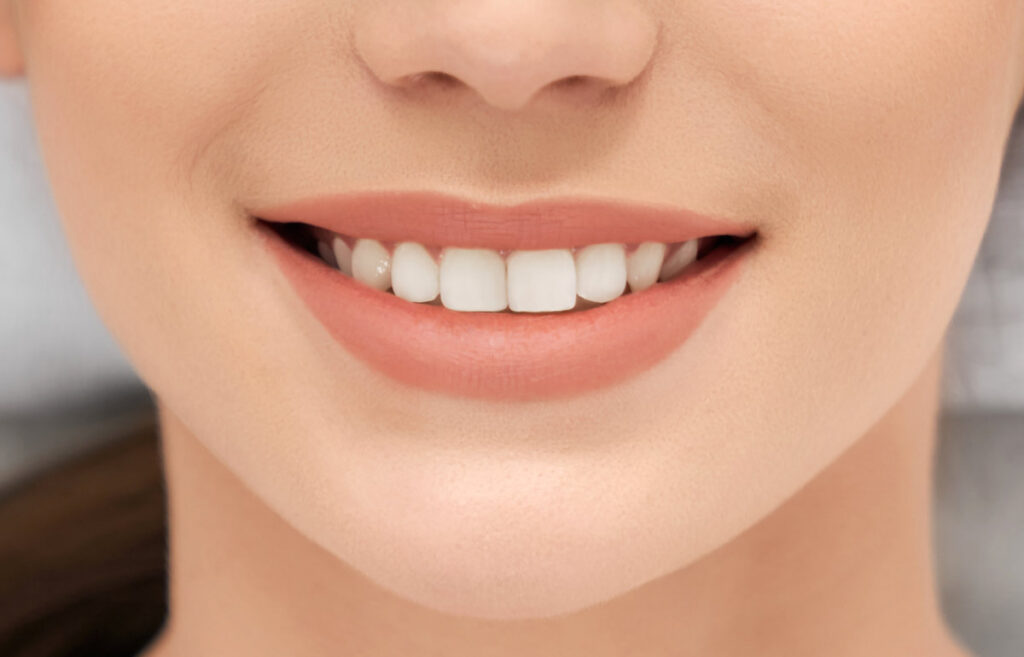
A smile makeover can fix discoloration, chips, gaps, worn edges, and misshapen teeth, often addressing several concerns in fewer appointments than most people expect. Many people spend years working around these concerns, assuming they cannot be changed, without realizing how many solutions are available today. If you have been holding back your smile in photos, conversations, or everyday moments, a personalized treatment plan may address more than you think.
At Lexington Family Smiles, our team offers cosmetic dentistry built around the needs of real families throughout Lexington, Cayce, Red Bank, and the surrounding Midlands community. We provide personalized smile makeover plans that combine cosmetic and restorative options to address your most pressing smile concerns, and we do it without pressure or upselling, just straightforward, honest care built around your goals. From discoloration to structural damage to uneven spacing, the smile you have been holding back may be closer to reach than you think.
What Does a Smile Makeover Actually Include?
A smile makeover is not a single procedure. It is a customized combination of two or more treatments selected based on your specific goals and the current condition of your teeth, whether the focus is cosmetic, restorative, or both. The exact plan depends entirely on what you want to change, and our team walks you through every option before any decisions are made.
Research published by the National Institutes of Health confirms that dental treatment significantly improves patients’ oral health-related quality of life, positively affecting comfort, self-esteem, and social well-being over time. A smile you feel confident about can deliver a genuine benefit that extends well beyond how it looks in a photo.
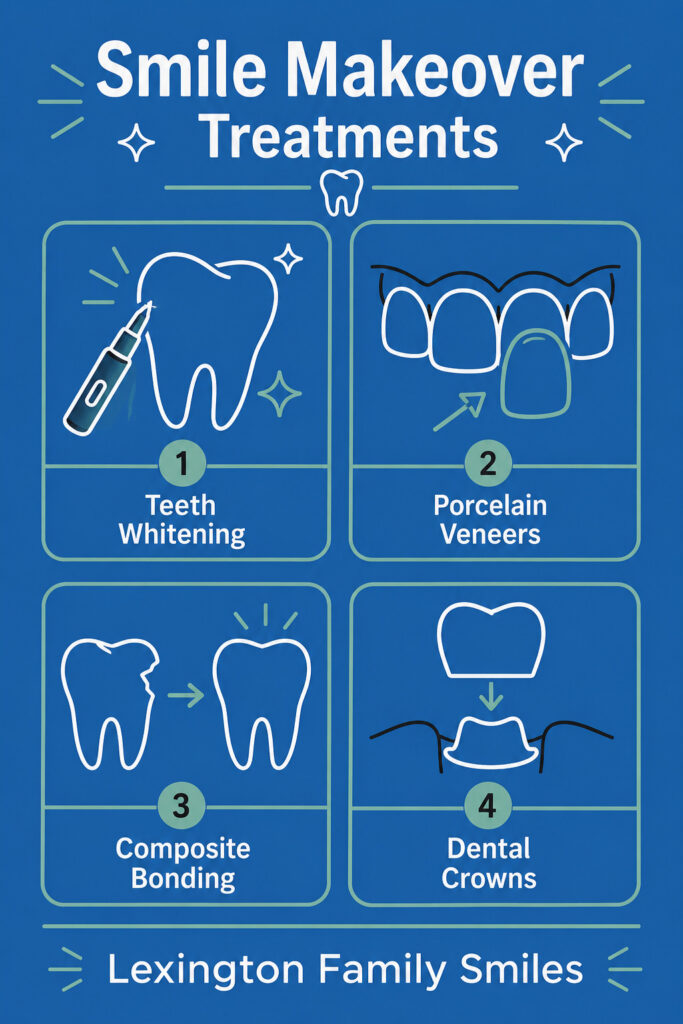
Common treatments included in a smile makeover may involve one or more of the following:
- Professional teeth whitening to reduce staining and discoloration
- Porcelain veneers to cover chips, cracks, gaps, or misshapen teeth
- Composite dental bonding to repair minor imperfections at an accessible cost
- Dental crowns to restore heavily worn or structurally compromised teeth
Each of these options targets different concerns, and many patients benefit from combining two or three of them. Our team works with you to identify the approach that best fits your smile, your timeline, and your budget.
What a Smile Makeover Can Address
Many of the concerns that bring patients to our office fall into a few common categories, and each one has a clear treatment path worth understanding.
Staining and Discoloration
Coffee, tea, red wine, and certain medications can leave deposits on tooth enamel that store-bought whitening products cannot fully address. Our professional teeth whitening service uses prescription-strength, custom-fitted trays so you can whiten on your own schedule at home, with more consistent results than an over-the-counter kit typically delivers. For deeper or more resistant staining, whitening is often paired with bonding or veneers as part of a broader smile makeover plan.
Chips, Cracks, and Minor Damage
Even a small chip can change the way a smile looks and feels during everyday conversation. Composite dental bonding is a practical, cost-effective option for minor chips and surface imperfections, applying tooth-colored resin directly to the affected area so it blends naturally with your surrounding teeth. For more significant damage, or when a tooth has lost a meaningful amount of its structure, a dental crown may offer greater long-term durability and protection while still matching the color and shape of your natural teeth.
Gaps and Uneven Spacing
Gaps between teeth are one of the more common cosmetic concerns we hear about, and they can affect the overall balance and proportion of a smile more noticeably than many people realize. Depending on the size and location of the gap, porcelain veneers may be an effective path forward, creating a fuller, more symmetrical appearance while also improving the color and contour of the treated teeth. In cases involving a true bite misalignment rather than a cosmetic gap, our team may also discuss orthodontic options before finalizing a cosmetic plan.
Shape, Size, and Symmetry
Teeth that are too short, too narrow, or uneven in shape can make a smile appear imbalanced even when the underlying oral health is perfectly fine. This is one of the most commonly overlooked cosmetic concerns, and it is also one of the most correctable. Bonding and veneers are both effective tools for reshaping individual teeth and bringing a more proportional, cohesive look to the full smile.
The Everyday and Confidence Benefits of a Smile Makeover
The most immediate benefit most patients notice is confidence. Smiling more freely in photos, at work, and in everyday conversation can make a genuine difference in how comfortable you feel in social situations, and that boost in comfort is well documented in dental research, not just anecdotal.
There can also be practical, day-to-day advantages, particularly when a smile makeover includes a restorative component like crowns or fillings alongside the cosmetic work. Teeth that are properly shaped and evenly aligned are generally easier to clean thoroughly with regular brushing and flossing, which can support your longer-term oral health. Correcting a tooth that has become worn, chipped, or oddly shaped may also make chewing more comfortable on that side of your mouth. None of these outcomes are guaranteed for every patient, since results depend on your individual dental history, but they are common reasons patients pursue a combined cosmetic and restorative plan rather than a purely cosmetic one.
What to Expect During Your Smile Makeover Consultation
Every smile makeover at Lexington Family Smiles starts with a conversation, not a sales pitch. We begin by asking what you would like to change about your smile, then follow with a clinical exam and, when helpful, digital imaging using our Shining 3D Scanner to map your teeth and bite in detail. From there, our team walks through the treatments that fit your goals, explains the realistic timeline for each option, and outlines a plan in plain language before you make any decisions.
Many smile makeovers can be completed in as few as two to four visits, though the exact timeline depends on which treatments you choose, how many teeth are involved, and whether any restorative work is needed first. Some patients start with a single treatment, like whitening or bonding, and add on later. Others prefer to complete the full plan in a shorter window. Either approach can work, and our team helps you decide what makes sense for your schedule and your goals.
Begin Your Smile Transformation at Lexington Family Smiles
Our team at Lexington Family Smiles has been providing dental care to families in Lexington, SC, for more than a decade, offering comprehensive, convenient, and compassionate dentistry for patients of all ages, from a child’s first visit to advanced cosmetic work for adults. We believe every patient deserves both a healthy smile and one they are genuinely proud of. Our approach reflects this belief in the way we get straight to business, listen carefully, and put together a plan that fits your life.
For patients looking for a flexible, insurance-free way to manage their care, our Dental Savings Plan is a great place to start. Contact our office to schedule your smile makeover consultation and take the first step toward the confident, comfortable smile you have been waiting to share.
Frequently Asked Questions About Smile Makeovers
How Long Does a Smile Makeover Take to Complete?
The timeline depends on which treatments are part of your plan. A makeover that combines whitening and bonding may be completed in as few as two to four visits, while a plan involving veneers or crowns on multiple teeth can take longer since these restorations are often custom fabricated. During your consultation, our team gives you a realistic timeline based on the specific treatments you choose.
Is a Smile Makeover Permanent?
Some treatments last longer than others. Porcelain veneers and crowns are generally more durable and long lasting, while composite bonding and professional whitening may need touch-ups or refreshing over time. None of these treatments should be considered permanent in the sense of never needing maintenance, and your dentist can explain the expected lifespan of each option included in your plan.
Does a Smile Makeover Hurt?
Most smile makeover treatments cause little to no discomfort. Whitening and bonding typically require no anesthesia at all, and procedures like crowns or veneer preparation use local numbing so you stay comfortable throughout. Many patients describe the experience as similar to a routine filling appointment, and any mild sensitivity afterward usually resolves within a few days.
How Much Does a Smile Makeover Cost?
Cost varies widely based on which treatments are included and how many teeth are involved, since a single-tooth bonding repair and a full-arch veneer plan represent very different levels of investment. Our team reviews itemized pricing with you during your consultation, and our Dental Savings Plan offers a flexible, insurance-free way to manage costs for patients without dental coverage.
What Is the Difference Between a Smile Makeover and Veneers?
Veneers are a single type of treatment, thin shells bonded to the front of teeth to change their color, shape, or alignment. A smile makeover is a broader term for any personalized combination of treatments, which may or may not include veneers. Depending on your goals, your plan might rely on veneers alone, or it might combine them with whitening, bonding, or crowns for a fuller result.
About the Author
Lexington Family Smiles
Dr. Moulton has practiced dentistry for 17 years, including 13 years at Lexington Family Smiles, after earning his DMD from the Medical College of Georgia and completing an Advanced Education in General Dentistry residency through NYU Langone Dental. He is a member of the American Dental Association and the South Carolina Dental Association.